江城子·梦中了了醉中醒 I see my previous life in Yuanming
已更新:7月4日
江城子·梦中了了醉中醒
(陶渊明以正月五日游斜川,临流班坐,顾瞻南阜,爱曾城之独秀,乃作斜川诗,至今使人想见其处。元丰壬戌之春,余躬耕于东坡,筑雪堂居之,南挹四望亭之后丘,西控北山之微泉,慨然而叹,此亦斜川之游也。乃作长短句,以《江城子》歌之。)
原作: 苏轼(字子瞻, 号东坡居士; 11世纪北宋)
英译及赏析: 闵晓红(2025年8月)
梦中了了醉中醒, 只渊明,是前生。
走遍人间,依旧却躬耕。
昨夜东坡春雨足,乌鹊喜,报新晴。
雪堂西畔暗泉鸣, 北山倾,小溪横。
南望亭丘,孤秀耸曾城。
都是斜川当日景,吾老矣,寄余龄。
I see my previous life in Yuanming
--to the tune of Jiangchengzi
(The poet Tao Yuanming visited the Tilted Valley on the fifth day of the Chinese New Year. He found a beautiful spot by a stream, enjoying the view of Mt. Zengcheng among hills and pavilions. He wrote 'The Tilted Valley,' which made it a famous destination. In 1082, I lived a simple farm life at Dongpo (East Slope). My home, the Snow Hall, stood by a creek that flowed from the west to the north hill, then turned southward through hills and pavilions. This place reminds me of the Tilted Valley, inspiring me to write this long-short verse lyric to the tune of Jiangchengzi.)
Chinese original: Su Shi
English version: Julia Min (Aug.2025)
I see my previous life in Yuanming,
clear in dreams, awakened in drinking.
We spent in vain many a life span—
rising to fame, yet returning to land.
The East Slope, soaked with rain last night,
Awoke to a clear day amid magpies’ flight.
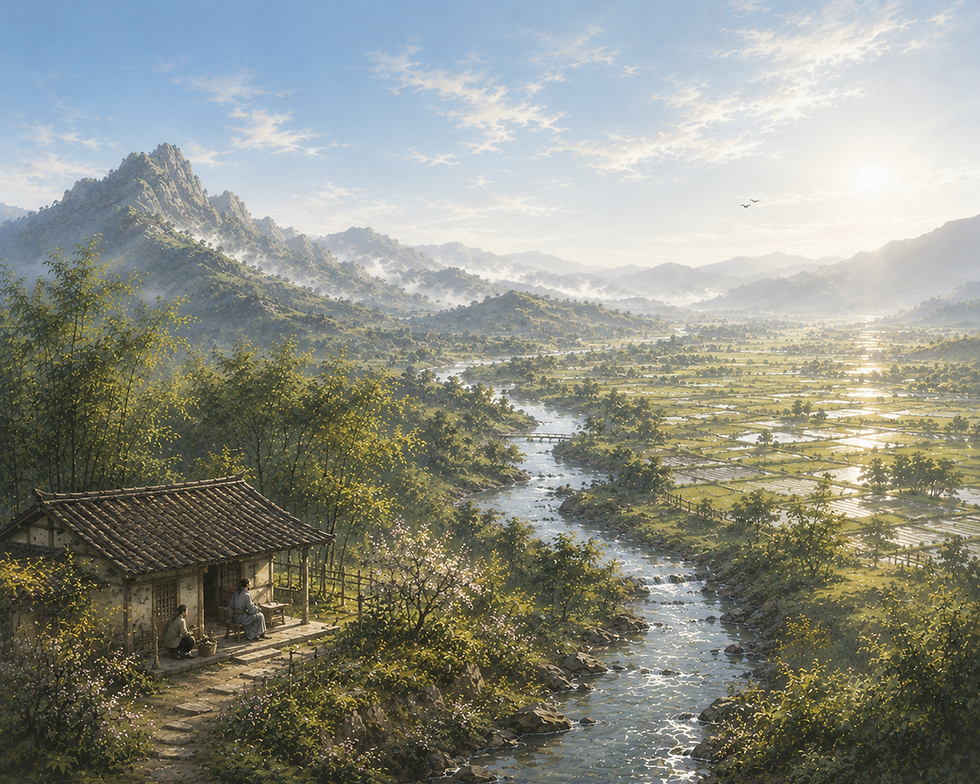
The west side of Snow Hall hides a spring,
Winding up north, then down, murmuring.
Mt. Zengcheng rises in the distant south—
Amid hills and pavilions, it stands proud.
All but what he saw at the Tilted Vale
—A place ideal for the rest of my tale.
For Appreciation
Su Shi was, by all accounts, a man who refused to stay down. Exiled, demoted, sent to the edge of the empire — and each time, he built a house, planted a garden, wrote poems, and made friends with commoners in the street. His political foes must have been furious. They sent him to the middle of nowhere, and he responded by having the time of his life.
This poem is that spirit in miniature. He looks at his little farm on East Slope, hears a spring trickling past Snow Hall, sees a hill like the ‘Mt. Zencheng’ rising in the distance, and thinks: This is exactly what Tao Yuanming saw. Never mind that he's in exile, far from court, far from glory. He has rain on his fields, magpies in the morning, and a stream that winds north then south like it owns the place. What more could a man want?
There's a quiet Daoist joke running through it all. The spring doesn't rush; it murmurs. The mountain doesn't boast; it stands. And Su Shi, instead of plotting his return to power, simply watches and compares his humble valley to the Tilted Vale of legend. He doesn't claim to have surpassed Yuanming — he just notes the resemblance, shrugs, and settles in for the rest of his life tale. That's not ambition; that's contentment. That's not defeat; that's wisdom.
And the best part? He was right to wait. The emperors changed, as emperors do, and Su Shi was recalled to court, his talents once again in demand. But by then, he had already won — not by fighting, but by letting go. He had found his Tilted Vale from his slope of mud and stone, and no amount of political chaos could take that away.
What a life! What a poem! What a man who could turn exile into a vacation and a stream into a mirror of paradise!
Reference:
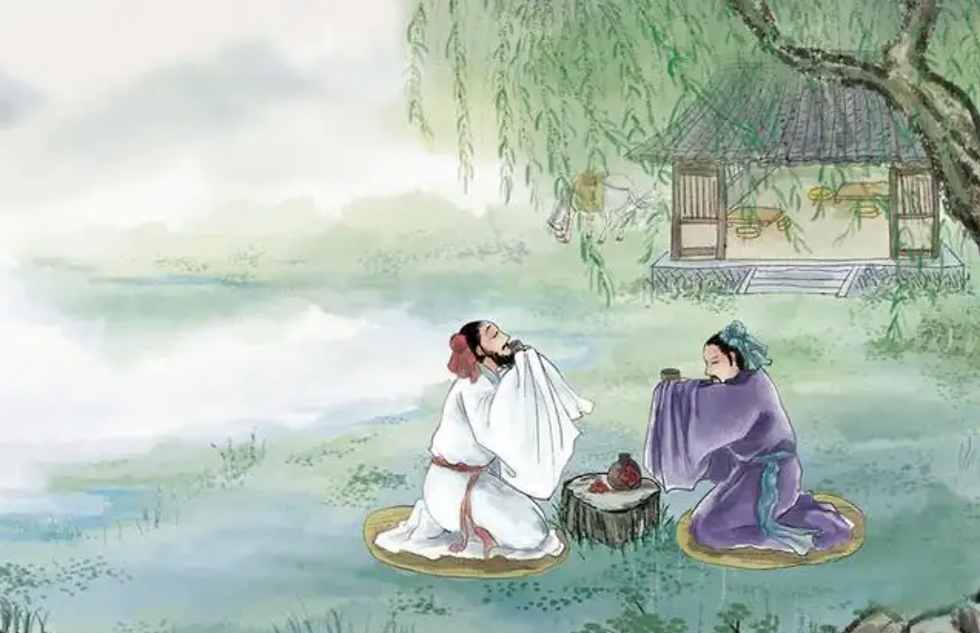
picture from https://collection.sina.cn/yejie


留言