浣溪沙·端午 For the Dragon Boat Festival
已更新:6月20日
For the Dragon Boat Festival
—to the tune of “Silk-Washing Stream”
Chinese original: Su Shi (11th Century)
English version: Julia Min (2026.5 26)
A blooming scent seeps thru her green silk.
It is tomorrow—the Dragon Boat Festival.
In a bath of spring’s sweet herbs, she’ll glow.
The river will be perfumed by all on the ripple.
Twined on her fair arm are threads of rainbow.
Hanging in her hair loops, the charms of hope.
In beauty she shines, in grace she roams,
Forever ever, may she be the love of my soul.
For Appreciation
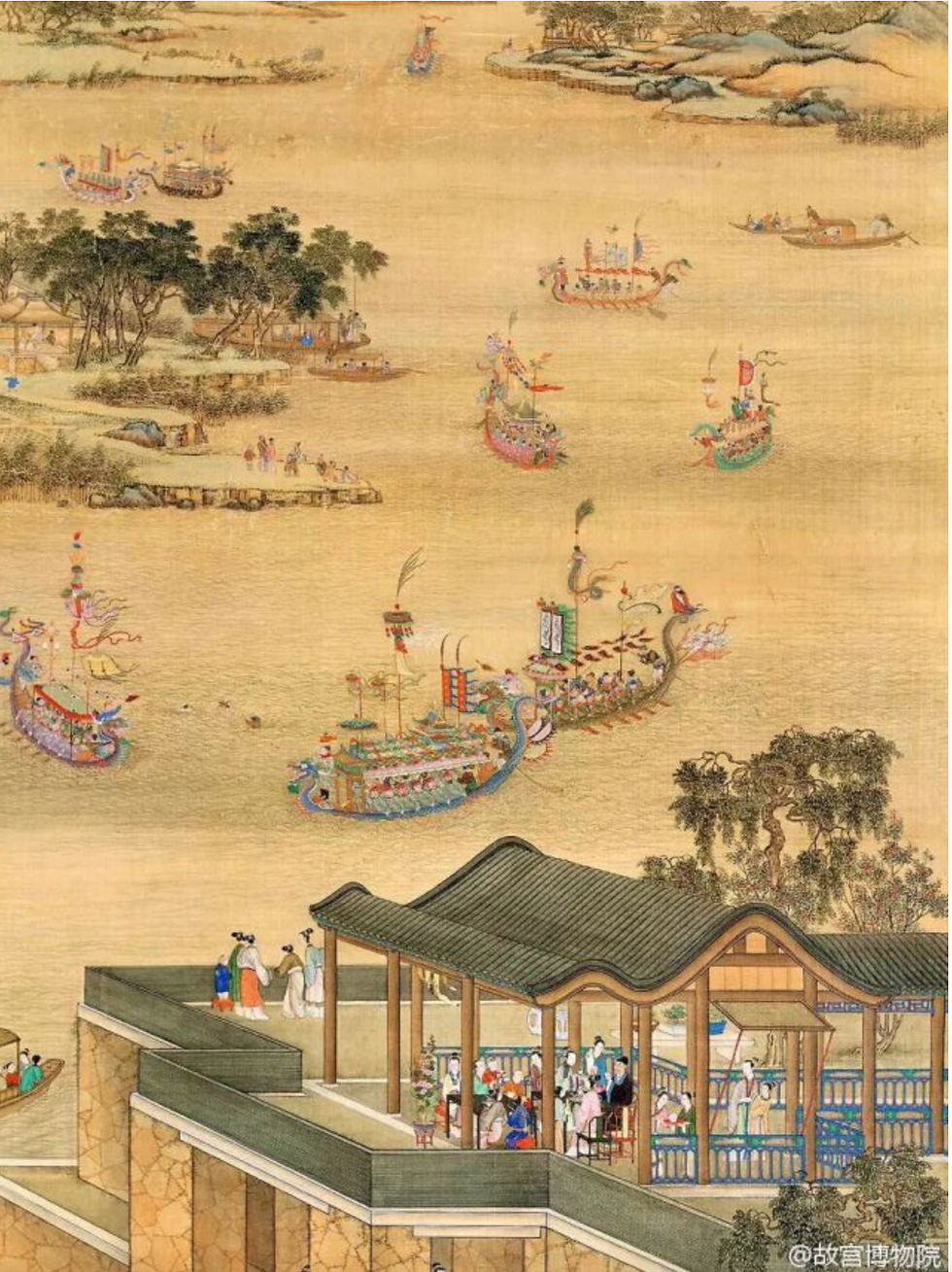
Su Shi wrote this for the Dragon Boat Festival, a day traditionally marked by bathing in fragrant herbs, wearing rainbow-colored silk threads, and hanging small charms to ward off evil. The poem captures not only the sensual pleasures of the festival — the light sweat on silk, the sweet orchids, the perfumed river — but also a tender, almost timeless wish: that the beautiful woman before him may be cherished for a thousand years.
Despite its festival setting, the poem is deeply personal. It was written during Su Shi’s exile in Huizhou, addressed to his concubine Wang Zhaoyun, who accompanied him into the southern wilderness. The poet’s gaze moves from her body (sweat, arm, hair) to the natural world (herbs, river, ripples), and finally to a wish that transcends time. This blend of the intimate and the eternal is the classic Su Shi — a man who found grace in exile and turned daily rituals into prayers.
My translation does not seek word-for-word fidelity. Instead, it undertakes something more interesting: to live inside the poem’s mood and music, and to remake it in English with equal measures of elegance, warmth, and restraint.
The original Silk-Washing Stream is a six-line ci lyric, traditionally sung. My English version breaks the poem into two stanzas of four lines each, with irregular rhyme and rhythm. This is not a failure of fidelity but a recognition that English poetry has different bones: it breathes differently.
The language is deliberately simple, almost plain. No archaisms, no exoticisms. The poem trusts its images — a ripple, a thread, a charm — to carry the weight of tradition.
Chinese original:
浣溪沙·端午
宋·苏轼
轻汗微微透碧纨,明朝端午浴芳兰。流香涨腻满晴川。
彩线轻缠红玉臂,小符斜挂绿云鬟。佳人相见一千年。
Reference:


留言