惠崇春江晚景2/2 On “The Spring River, Breathing into Evening”
- Julia Min
- 2025年3月12日
- 讀畢需時 2 分鐘
已更新:1月7日
惠崇春江晚景(第二首)
原作: 苏轼(字子瞻, 号东坡居士; 11世纪北宋)
英译及赏析: 闵晓红(2025)
两两归鸿欲破群,依依还似北归人。
遥知朔漠多风雪,更待江南半月春。
On “The Spring River, Breathing into Evening”(2/2)
--an inscription for the painting by Monk Hui Chong
Chinese original by Su Shi (11th AC, social name 'Dongpo')
English version + annot. by Julia Min (2025)
A flock of wild ducks set off, heading north;
while two lagged behind the flight V-form.
The desolate desert lies in snow and wind;
Best to linger awhile in River South spring.

Appreciation: (quoted from On “The Spring River, Breathing into Evening” 1/2)
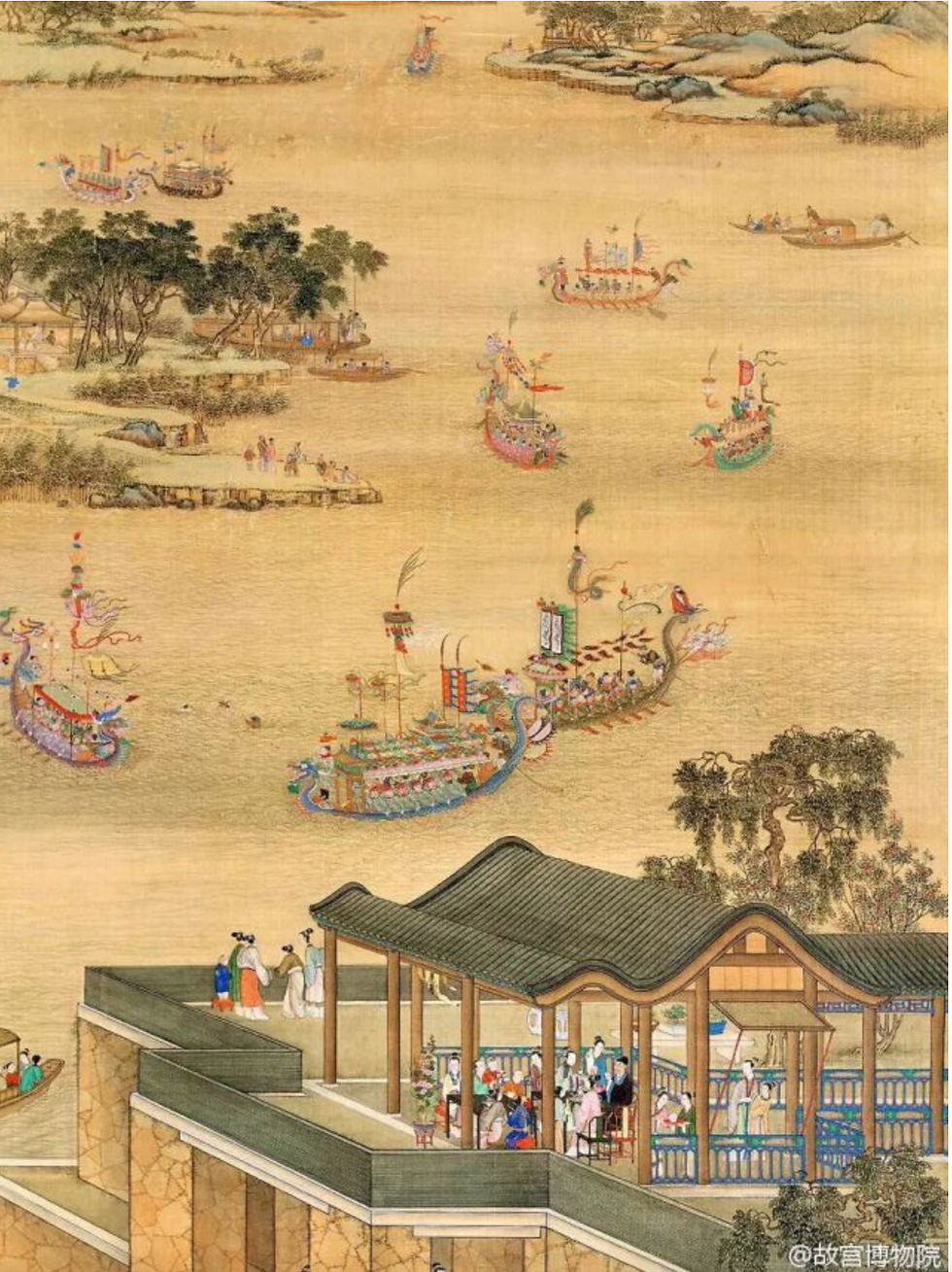
Hui Chong (965–1017, Song dynasty) was a Buddhist monk and painter, best known for his landscape works of mountains and water, often animated by geese, ducks, and other birds, scenes of rural life and everyday vitality, which modern scholarship might describe as a form of early humanism. A collector of Hui Chong’s painting likely sought an inscription from Su Shi, whose literary authority would have further elevated the work.
Regrettably, as with so many artworks of the period, the painting itself did not survive. It was most likely lost during the invasions of the Jin and Liao, or in later upheavals. Yet the artwork has breathed through Su Shi’s poem, which has been celebrated ever since. Today, nearly every school student in China can recite it, and its second line in particular is frequently quoted in literary and cultural discourse.
In this poem, Su Shi gives voice to the precise moment when nature awakens—when disparate sensations of sight, sound, and movement are subtly compressed into the single plane of a painting. The painting delights the eye as poetry delights the ear and the imagination, rendering the image in rhythmic motion. As the Song thinkers would have it: poetry may be painted, and painting, in turn, may be composed with words.
For your interest, the western landscape painting genre didn’t emerge as a distinct genre until a few hundred years later, during the Renaissance and peaking in the Industrial Revolution.


留言